Showing posts with label Baptist Distinctives. Show all posts

Tuesday, 23 February 2016

Worship Wars and Baptist Theological Distinctives

Historically, Baptist worship is simple, not elaborate

In the worship wars, so little has been said regarding what kinds of worship might flow out of a distinctively Baptist theology. This fact is strikingly incredible.

A distinctively Baptist theology entails 1) a Believers’ church; 2) Priesthood of Every Believer; 3) Soul Competency (a corollary of the Priesthood of Every Believer; and 4) church autonomy AND associationalism.

These four points should inform worship services of any given Baptist church. Unfortunately, however, I never ever hear these issues raised in the context of worship wars. Instead, we only discuss issues such what do our church members like and how can we use worship to appeal to new people. This article discusses how two of these doctrinal distinctives might impact Baptist worship.

A BELIEVERS’ CHURCH
In the days when church and state were co-extensive, people were regularly baptized as infants and attended worship with the rest of the members of the community at the parish church. (Given its Catholic background, it’s no coincidence that the Louisiana’s civil districts are called parishes, rather than counties.) Baptists opposed this sort of cultural Christianity, and formed congregations based upon profession of the individual’s faith.
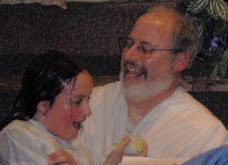
Baptists baptize those who profess faith

This emphasis on the Believers’ Church recognized that some people who attended worship were professing believers, but some were not. Such a distinction was hardly possible in those churches where all the town’s people were ordinarily baptized as infants. The distinction then allowed Baptist worship services to have a special opportunity to respond to the gospel. Thus, Baptist preachers would often preach persuasively and extend an invitation to make a public profession of faith.
The invitation after the sermon, in Baptist worship then, arises out of Baptist theology.

PRIESTHOOD OF EVERY BELIEVER/SOUL COMPETENCY
Baptists gave increasing emphasis to Priesthood of Every Believer. While this doctrinal emphasis is often noted in connection with church governance and the autonomy of the local church, it has also had a huge impact historically on Baptist worship. This doctrine prompted Baptists to give up vestments that distinguish clergy from laity. It also gives room to congregational participation in worship—even the “least maidservant” is welcome to speak a word to the church.

From this doctrinal distinctive has flowed the Baptist worship tendency to include non-professionals in worship leading. For high church musical performances, one might attend a Lutheran, Anglican, or Presbyterian church. Baptists, however, usually feature their own congregants. One scholar likened Baptist worship as akin to hanging up your kids’ artwork on the refrigerator: no one else would frame the colorful scribbles to display in a great hall, but it is precious and meaningful to you. Moreover, Baptist worship ministry is about equipping congregants to lead in worship; in effect, we train musicians. Accordingly, we would rather have someone leading us in worship who has a vibrant Christian testimony than someone who is an expert musician.


For these reasons, Baptists are inclined toward a simpler hymnody. They do enjoy higher church hymns with complex chordal sequences such as “O Sacred Head, Now Wounded,” but simpler hymns such as “I Must Tell Jesus” and “What a Friend We Have in Jesus” are favorite staples of Baptist hymnody. 

Monday, 1 June 2009

Baptist Primary Distinctives: Soul Competency and “Believers’ Church”

The Baptist movement was forged in an age when a kingdom’s subjects were required to belong to the monarch’s own religion, and in an age when that religion was being switched back and forth with every other new monarch. Moreover, the Baptist movement was forged in an age when infants were baptised into their parents’ religion. And finally, the Baptist movement was forged in an age when everyone belonged to the church. These cultural factors significantly influenced Baptist distinctives.

In broad categories, Baptist distinctives can be brought down to two urgencies. The first urgency has historically been known as Soul Competency. Soul competency arises out of the conviction that the Spirit dwells in every believer. To be sure, this was an emphasis in all the Reformation churches, providing the impetus for bypassing intermediaries such as priest, bishop, and pope for one’s access to God’s forgiveness of sin. However, Baptists thought more deeply and more consistently about the indwelling of the Spirit than other movements. This doctrine informed their polity in that they accepted “congregational governance,” refusing to accept the notion that a powerful bishop or powerful elder board should rule over the congregation by fiat; rather, they embraced the notion that the congregation itself was competent to make decisions about its own ministry. This also implied that Christians did not have to embrace the religion or theology of the Crown, resulting in the martyrdom of many Baptist preachers who languished under poor health conditions in jails throughout Britain in the 17th century, including, for example, John Bunyan. Thus, the concept of the separation of church and state historically was first espoused and cogently argued by Baptists, although the term has been much abused in recent American history and political life.

The second urgency was a view of the church as a “voluntary association.” That is to say, people were not members of the church on the basis of their parents’ decision to have them baptised as infants. Rather, inclusion in the church was on the basis of the individual’s decision to follow Jesus, and upon his profession of faith as he was immersed in the waters of baptism. Early Baptists recoiled at the notion of baptising unbelievers, which is precisely what happens when an infant is baptised.

These two urgencies had several practical outcomes in the local church. First, Baptist churches were countercultural; in a culture where everyone belonged to the official, State-sponsored church, Baptists withdrew and formed their own independent congregations. Secondly, Baptist churches often had a congregational intimacy and purity which was practically impossible with those churches which included into its membership the whole of society on the basis of infant baptism. Thus, while the term “Believers’ Church” ought to have been theologically redundant, it was a practical reality, given that membership in the “Cultural Church” did not even include a person’s own declaration of faith.

Regrettably, many Baptists today have no clue as to these two primary distinctives and urgencies.