Saturday, 20 June 2020

The Foulest of Crass Language: Why Christians Should Avoid the F-Word


Image may contain: 1 personSomeone once defended the use of the f-word to me, claiming it was just a word of anger. Top reasons why Christians should not use the f-word.
  1. It took Christians centuries to get sex off the public streets of Rome into the privacy of the bedroom where it belongs.
  2. Likewise, it took Christians centuries to endow sex with meaning beyond mere procreation—to elevate the idea of sex beyond the animalistic notion conveyed in the f-word. Thus, sex is something holy and to be honored even reverenced.
  3. The f-word is a crass and profane word that offends the holiness of the gift of sex.
  4. Use of the f-word conveys much about a person who uses it. Not only is the user profane, but inarticulate, and conveys to the world that the user has a limited vocabulary.
  5. Perhaps the harshest use of the f-word is when it is flung at a person in anger. In such usage, it is an execrative metaphor for the act of rape—the ungodly perversion of the gift of sex. It is a curse formula that conveys a wish that the hated person would experience the utter contempt and horror associated rape. It conveys more than just, “I hate you and want nothing to do with you;” the expression is a maledictive curse, something akin to, “By the power of Isis [or whatever your DEMON is], may my enemy experience the utter helplessness, pain, violation, and horror of violent bodily penetration forever and ever.”


Friday, 6 March 2020

Believer's Baptism: Short Review of Its Rationale and History


The movie OH BROTHER, WHERE ART THOU? popularized the Appalachian hymn DOWN TO THE WATER TO PRAY, with its celebration of baptism. Incredibly, the movie’s protagonist (George Clooney) dismissed baptism, scoffing at the notion of eternal life, and saying he had bigger fish to fry. Hardly!
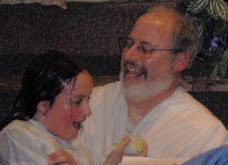
We have scheduled baptism for Resurrection Sunday, April 12, as part of our Easter service. The early Christians always celebrated baptism at Easter because it so dramatically depicts the resurrection. Those being baptized are lowered into a watery grave, and then raised up to live out their new lives in obedience to Christ.
What is baptism? Is it an act that gets you heaven’s eternal reward (as the character in the movie claimed)? Is it something which must be done to infants to keep them from hell in case they die? Is it like a kindergarten graduation ceremony or a birthday party to make someone feel special? Baptism is often misunderstood and underappreciated by the Church, even by us Baptists who carry its namesake (the 2008 Baptist Hymnal, for example, lists but two baptism hymns!).
The earliest generation of Christians offered baptism only to believers. They tested the new convert, they explained salvation to them, and only then were they baptized.
Early Christians were understandably concerned about the salvation of their infants, especially since infant mortality rates were so high. Early in the history of Christianity, there arose a pervasive misunderstanding of baptism which led people to think that baptism confers a saving grace on the person being baptized; this led them to infant baptism. This view depended on the dubious interpretation that baptism is the New Testament equivalent of circumcision. Israelite baby boys were “born into the covenant” by virtue of their descent from Abraham, and parents circumcised them to demonstrate their allegiance to God. The coming of Christ and the New Covenant put an end to this. Children are not born “in Christ” or into the New Covenant. A person can only be born again in Christ through faith. This is why Baptists baptize only believers, and assert that babies (and those with mental disabilities) are already in a state of grace until they reach a certain maturity (“age of accountability”).
Churches that practice infant baptism do so in order that the parents might demonstrate their own faith, and promise to raise the child in the nurture of the church. For Baptists, this is the essential meaning of baby dedication. Biblical baptism says nothing about other people’s faith. Rather, baptism is about the faith of the one being baptized. Baptists offer parents the opportunity to dedicate their babies to the Lord as an expression of the parents’ faith.
 During the Middle Ages, there was an essential unity of Church and State. Every person in the king’s realm practiced the king’s religion. In Christian states, everyone (or nearly everyone) was baptized, whether or not they were believers. Everyone claimed to be a Christian simply because they were baptized, even if they lived like the devil. This practice was profoundly contrary to Jesus’ command to go, make believers, and then baptize them (Matt 28:18-20).
As Christians had better access to the Bible in their own language, the Baptist movement emerged. The core issue that distinguished Baptists from others was the “Believer’s Church,” and that only those who have professed a genuine faith belong to God’s Church. For this doctrine, Baptists were regularly persecuted (even in America during and after colonial days; see the image of Obadiah Holmes being whipped for his Baptist faith). Some were actually drowned as a mock re-baptism. Baptists were so convinced that only believers should be baptized that they were willing to die for their doctrine.
For our part, Baptists believe that the first urgency—the first order of business for a new follower of Jesus, is to obey his command to be baptized. Baptism is not optional. Nor is it to be deferred for the sake of one's personal feelings or preferences. If one fails to be obedient to this first command, what is the point of following Jesus at all?
Yet, baptism is not something which saves. Rather, the person who is already saved is called to be baptized. That is, baptism is for those who have already decided to follow Jesus. Indeed, baptism is a person's declaration to the world: "I am a Christian. I follow Jesus. I pledge my life and devotion to him." As such, baptism is not a private event. It is a public event, to be undertaken before many witnesses.
Moreover, baptism is a multifaceted symbol: 1) the washing away of sins through faith in Christ; 2) the death and burial of the old life, and the beginning of the new life; and 3) the placement of a person into the family of God, the Church.
If you are already a believer but have not received believer's baptism, we invite you to come down to the river to follow Christ in baptism.

Wednesday, 8 January 2020

Thinking of Reducing the Three Church Boards Down to a Single Model? Don't.

There are typically two boards in a traditional Baptist church: Board of Deacons, and Board of Trustees. Sometimes, in larger churches there might be a Board of Christian Education.

Now, in the healthy Baptist church, the pastor leads and implements his vision and agenda 1) by persuasion; 2) by his own example; 3) by good administration; and 4) by good communications. He must not be the guy who leads by executive order. There is no room for Protestant Popes within the healthy Baptist church.

This model is successful for the pastor depending on how much opportunity a pastor has to persuade people. The pastor has maybe half an hour on Sunday to convey his vision, and maybe some time at midweek Bible study. The rest of the time comes from his face time in these board meetings.

If the two or three board meetings are reduced to a single board meeting, the pastor gets but one opportunity a month to sit in an intimate setting with his church members to discuss the church's ministry.

Further, let's take a church of 200 members. Assuming 1 deacon for every 25 members, there would be 8 members on the Board of Deacons. Thus, the pastor is but one voice in nine. On any given agenda item, individuals might well voice their opinion--maybe two or three minutes each! Right there, the pastor's ratio of input will be his two minutes to 16-24 minutes from others. It is unfortunate enough in this model that pastor's get so little time to share his views compared to the input from others, especially if the pastor has some expertise on the matter and has given considerable thought to it! In a two hour meeting, assuming each person has equal time, the pastor will have his share of about 13 minutes. If there are three boards, the pastor gets about 39 minutes a month to express his views and urgenices.

Now, let's pare this down to a single board. No longer does the pastor have three monthly meetings with a smallish intimate group of eight church members. Now, it is only one meeting a month, and the board must be comprised of 12 to 15 board members. In a two hour meeting, assuming each person has equal time, the pastor will have his share of 8 minutes.

All this to say, in a healthy traditional Baptist church, rarely does a pastor have substantial face-to-face opportunities to convey vision. But reducing the Boards down to a single Board reduces those opportunities substantially. In the examples above, with a multi-board model, the pastor gets 39 minutes to persuade and articulate vision in an intimate setting per month compared with a uni-board model where the pastor has but 8 minutes in a not-so-intimate setting.


Small group meetings might be messy and even laborious, but the effective pastor can accomplish much more in two or three smaller meetings than in a single large meeting.

Friday, 12 October 2018

Hymn Notes: ALL CREATURES OF OUR GOD AND KING


The hymn text is ancient, based on a poem written by Francis of Assisi in 1225. It was inspired by Psalm 148 which calls all creation to worship God. The psalm is longer but includes these verses:


Praise the Lord from the earth, you great sea creatures and all ocean depths,

lightning and hail, snow and clouds, stormy winds that do his bidding,

you mountains and all hills, fruit trees and all cedars, wild animals and all cattle,

small creatures and flying birds….

Let them praise the name of the Lord, for his name alone is exalted….


The tune captures the emotion of both the psalm and Francis’ poem. The words move quickly, for the composer is eager to include as many of the heaven’s and earth’s inhabitants and forces as possible in a few short lines. But then the tune slows down marvelously on the alleluias, emphasizing them by repetition and by making each syllable much longer than the other words of the song. The notes soar high on the alleluias to mark the climax of the hymn.

Friday, 17 August 2018

Hymn Notes: HERE I AM TO WORSHIP


An ad hoc group of our own singers calls us to worship today, singing HERE I AM TO WORSHIP. The praise song was written in 1999 by British composer and worship leader Tim Hughes and has been well received by evangelical churches worldwide; it is published in the Baptist Hymnal (2008) and other major hymnals. It is reported that the song came from Hughes’ personal reflection on Phil 2 which details Jesus’ willingness to become a man and to die a humiliating death, and his subsequent exaltation whereby all creation will one day bow and confess that Jesus is Lord.
The song has a contemplative or meditative feel to it, one that is not to be rushed or sung mechanically or lightheartedly. The chorus emphasizes simply that, in light of Jesus’s deep love and sacrifice, the singer has now come to worship Christ in humble adoration. The song has a short bridge section in which the phrase “I will never know how much it cost to see my sin upon that cross” is thrice repeated, to emphasize how our worship and thankfulness should be complete and genuine.

Friday, 10 August 2018

Pastor's Page: I Want That Mountain (Josh 14)

Caleb had done his part. He had marched out of Egypt with Moses and he gave the minority report when the 12 spies returned from their reconnaissance of Canaan. Although the Bible is silent otherwise, he very likely had fought alongside of Joshua in the battle with the Amelekites, and he may well have been a key figure in the 40 years of wilderness wandering. He may have served in the army that swept through Jericho and into the farthest reaches of the conquest of Canaan. The land still had areas still unconquered, but the conquest armies were dismissed and the soldiers were told to go to their new homes and enjoy God’s bounty in peace and rest.
But no, not Caleb. He would have none of this retirement business. He had explored the Hebron country and seen its bounty. He took seriously the divine mandate that the Canaanites must be driven from the land, and he reckoned he had enough strength to do the job.
Not that conquering Hebron would be easy. Caleb knew the challenges. No doubt his own folks pointed out his old age: “Caleb, you’re 85 years old. You’ve got no business driving Canaanites out and resettling all that hill country!” Worse than that, the region was under the control of the Anak family, including its three sons whose giant stature made them formidable warlords.
Caleb would not be dissuaded. When his tribe presented itself to Joshua to receive its allotment of land, he boldly presented himself and with much bluster he told Joshua that he wanted that mountain: “Now give me this hill country that the Lord promised me that day. You yourself heard then that the Anakites were there and their cities were large and fortified, but, the Lord helping me, I will drive them out just as he said” (Josh 14:12).
Since he believed God’s promises and saw his mighty deeds, Caleb scorned the threat of Anak and his three giant sons, and he went out to do the work God called him to do.
In Caleb’s prime years, the Lord protected him against all the wilderness dangers and helped him through many battles. The Lord also granted him many more years of health and vigor. Caleb perceived that God grants life and health for one reason alone, and that is to serve him and to advance the kingdom, and not to serve his own interest. Even in our twilight years, let us remain true and faithful, trusting, serving every day. Soon we will see Jesus our Lord face to face and it will be worth it all.


*This weekly blog article is designed for the Sunday Bulletin. If you need filler for your newsletter or bulletin, feel free to use it, with due attribution.

Hymn Notes: I'll Be a Sunbeam


We know very little about 19th century lyricist Nellie Talbot or her intention in writing this hymn. It has, however, become a favorite children’s song, perhaps because of its simple text, references to home, school, and play, and the sunbeam imagery that easily captures children’s imaginations. In 1900, the song was put to music by prestigious composer Edwin O. Excell who compiled and edited over 90 hymnals and songbooks, and produced the most common arrangement of AMAZING GRACE. The tune Excell composed for the song is melodic and easily singable.
Although the text is amenable to children, the message preaches well to adults. The sunbeam recalls light of the world imagery used by Jesus, and likewise fits Paul’s call to be stars shining in a dark and crooked generation. The text defines what it means to be a sunbeam: be loving and kind, pleasant and happy. The song dovetails nicely with our recent sermons on the call to holiness:

I will ask Jesus to help me
To keep my heart from sin,
Ever reflecting his goodness,
And always shine for him.

We sing this song today knowing that sunbeams bring a lot of joy and happiness.